
[English only]
Auteurs : Edouard Civel, Anna Creti, Gabrielle Fack, Daniel Herrera-Araujo
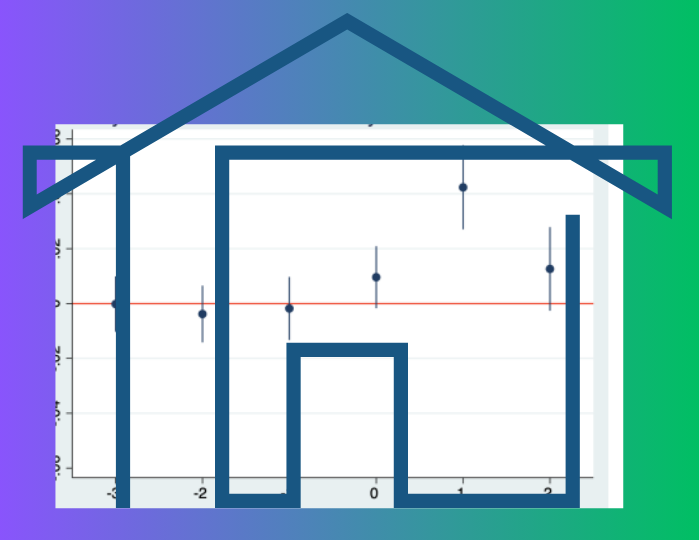
In this paper, the authors evaluate France’s phased rental ban on energy-inefficient housing using nationwide housing transactions (2016–2023), linked to Energy Performance Certificates (EPCs) and occupancy records. Focusing on apartments, they use a reduced-form design around the 2021 policy announcement. They find that the annual probability of sale for treated units (EPC G dwellings that were rented prior to sale) increases by 0.72 percentage points. Relative to a baseline annual sale probability of 2.9% for rented EPC G dwellings, this corresponds to a 25% increase.
The reform also changes post-purchase use. Within two years of sale, the share of sold EPC G apartments that are rented declines by about 3.8 percentage points, while owner-occupation rises by roughly 2 percentage points. Given that around 36% of transacted apartments are rented in the pre-announcement period, a 3.8-point decline implies about a 10% reduction in the share of newly purchased apartments that enter (or remain in) the rental market. Prices also re-sort across EPC ratings in ways consistent with expected renovation and compliance costs. Finally, the authors estimate a structural equilibrium model of housing demand that matches these moments and observed market shares. Counterfactual simulations suggest that, under full implementation, owner-occupiers and second-home buyers increase their market shares at the expense of landlords, with price effects concentrated among the least energy-efficient dwellings.
Keywords: Energy performance certificates, hedonic models, sorting demand estimation models.